
Talent doesn't peak on schedule
We need an art workers’ stipend that supports artistic deepening and continuity

Editors note: In this text, I use the words woman and women as inclusive terms. They are intended to encompass woman+ / women+: trans women, non-binary and gender-diverse artists, and others whose lives and practices are shaped by being gendered as female within social, cultural and institutional contexts. This usage aims to acknowledge shared structural conditions while respecting self-definition and difference.
There is this persistent fantasy shaping how the (art) world understands talent, even when we rarely articulate it out loud: talent appears early, becomes visible quickly, develops along a recognizable trajectory and, if everything goes well, stabilizes into a career that looks coherent on paper. It is a fantasy that aligns neatly with funding cycles, academic timelines and institutional reporting, but it sits uncomfortably with the lived reality of many artistic lives.
Especially those of women.
And that’s not because women lack ambition or seriousness. It is because their lives are more often marked by interruption. Care responsibilities, economic precarity, bodily change and (un)paid labour are structural conditions. Practice and life interweave this context. And the result is rarely a straight line: there are gaps in the cv, detours of life, periods of apparent quiet, which are followed by returns that are difficult to categorise as ‘progress’ in institutional terms. That’s what we know.
But what I often miss in this reading is that practice does not stop during those years. It continues and maybe sometimes slows down or sometimes condenses elsewhere. This less spectacular development remains structurally under-supported.
This Rocket Report-edition grows out of a recent lecture I gave on the opening of the Noorderlicht exhibition Het Veenmoeras, The Irish peatlands through the female gaze in collaboration with the Irish embassy in The Hague, which shows the work of photographers Bo Scheeringa (Bedum, 1961) and Tina Claffey (Ireland, 1967).
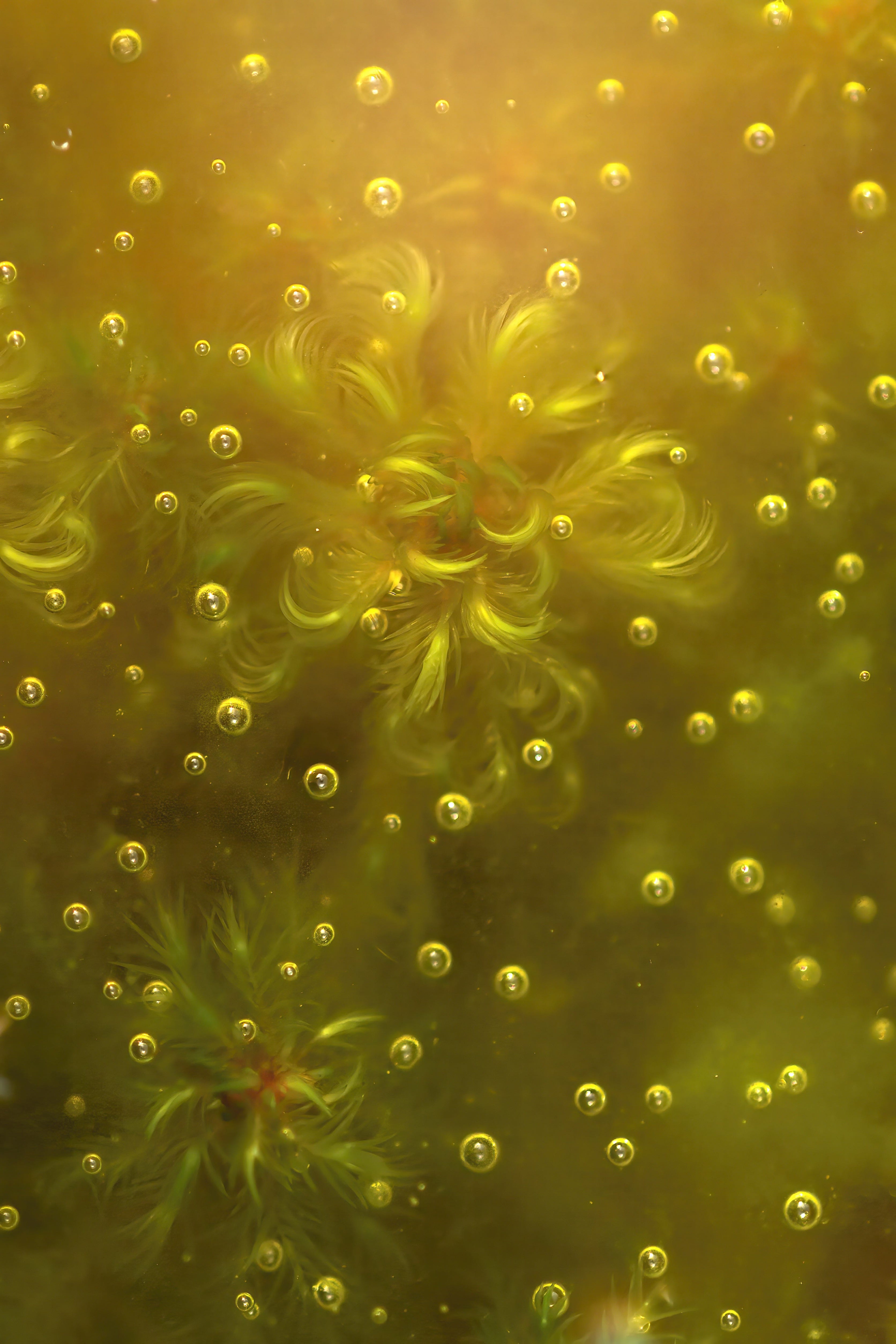
Bo began studying photography at the Fotoacademie when she was fifty years old. One could argue she was a romantic late bloomer with a comeback-narrative, but that was not the case. Bo had already lived a working and mothering life and carried that experience into a newfound practice. She was never an artist before.
And Bo is not an exception. This pattern recurs across practices that mature later in life. I would even go as far as to say that artistic work even can more precise and deepened rather than the louder ones: perhaps less driven by visibility and more invested in relation and community.
The art world struggles to name this phase, let alone to value it. Its ‘ageism’ is attached to youth, speed, and persists on early breakthroughs, as if sharp seeing were a resource that diminishes rather than deepens over time.1
Photography, especially in its mythologised form, has trained us to believe in the decisive moment: the fraction of a second in which everything aligns and the shutter clicks. But that moment only becomes legible because of everything that precedes it. As Tina Claffey told me: they are hours of waiting. Of repeated returns. And a body learning how to stay.
Photography, perhaps more than any other medium, thrives on duration not because photographs show time passing, but because they are made by bodies that have learned how to remain present long enough for something other than the obvious to appear. As looking deepens, certainty begins to loosen, and that loosening is not a loss of control but a gain in precision. This becomes very tangible in photographic practices like that of Judith Joy Ross (1964) works with an 8×10 large-format view camera. The camera itself already enforces a different tempo. It slows down the encounter, fixes the body of the photographer in place, and renders the act of photographing visible to those being photographed. Street portraits made with such a camera almost inevitably acquire a certain gravity. They do not pretend to be casual. They acknowledge the weight of the moment.
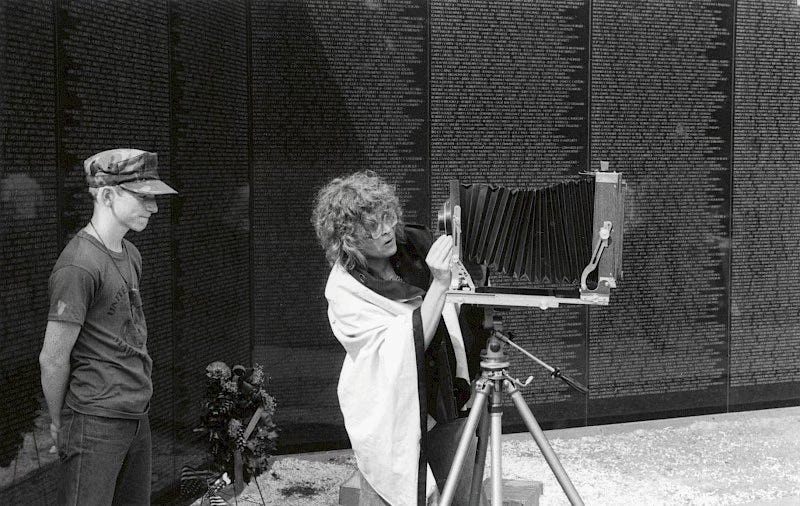
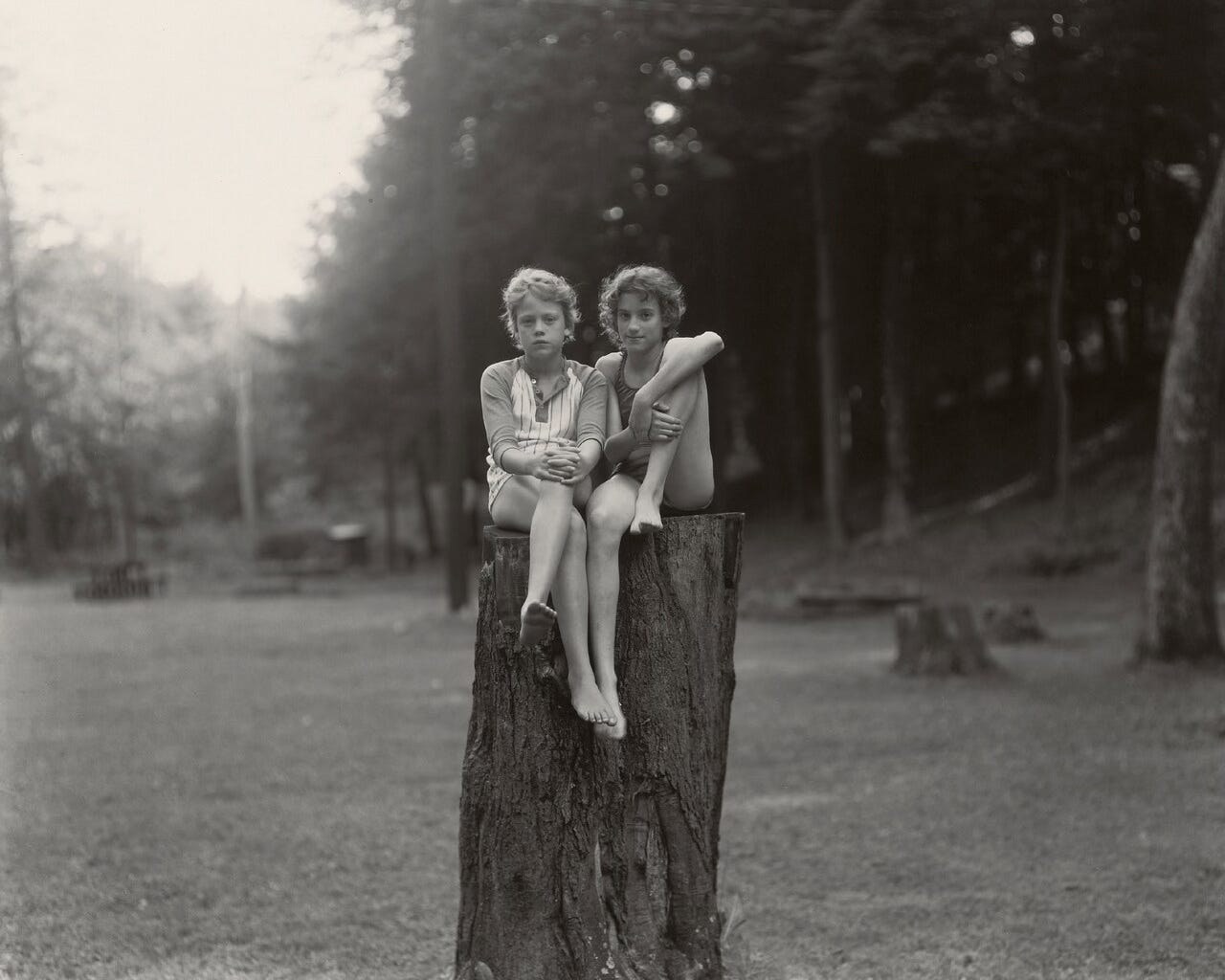
This gravity is palpable in Ross’s photographs of bathing children in Eurena Park, where play and vulnerability are held in careful balance, and even more so in her series of visitors to the Vietnam Veterans Memorial, made shortly after the monument opened in 1982. Standing with her heavy camera on the site, asking strangers for permission on what she herself described as a sacred ground, Ross did not rush to ‘claim’ the event. No. She arrived late, and stayed long. And with that, she allowed the grief to surface in faces.
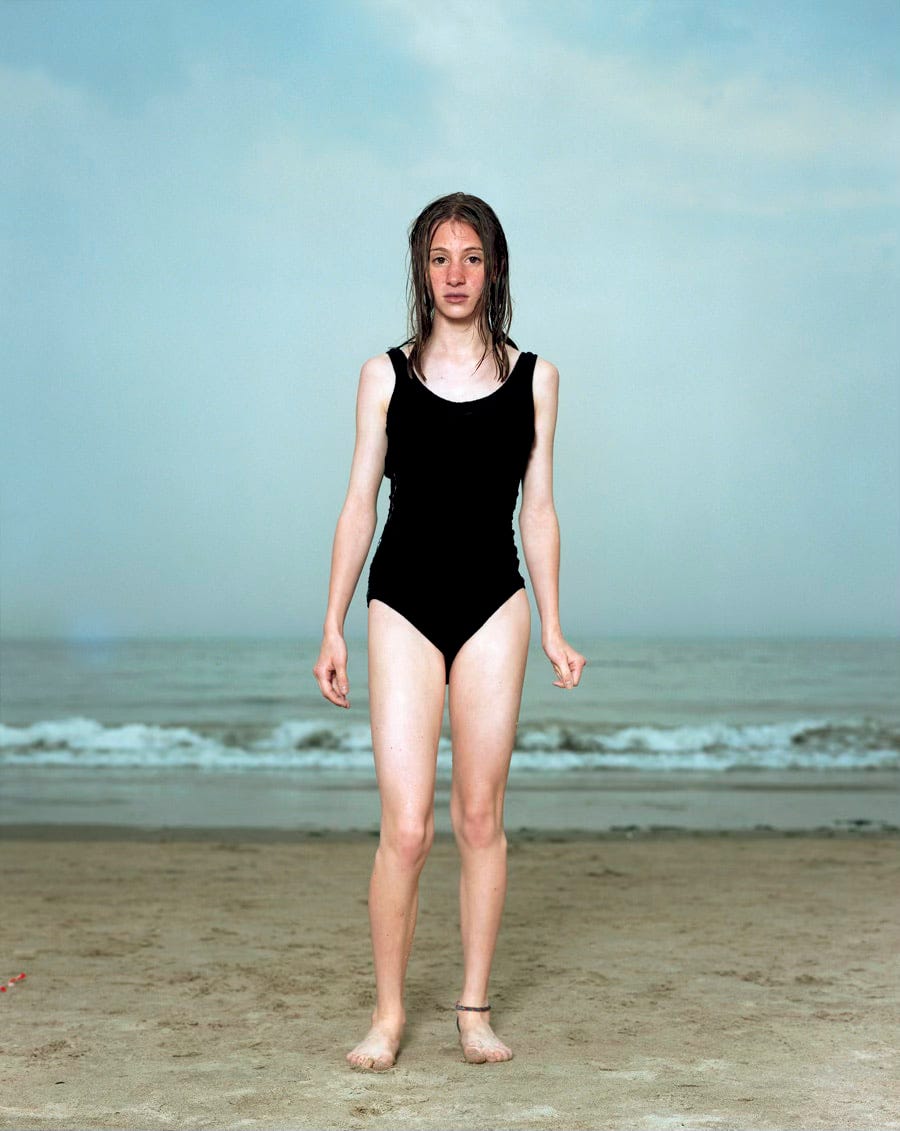
The work of Rineke Dijkstra (1959) can be read as a continuation and a translation of Ross's durational ethics of looking. Her now-iconic beach portraits of adolescents, made decades later, share with Ross a sensitivity to the bodily thresholds. Those moments when people are between states, between action and reflection, between self-consciousness and exposure. When Dijkstra photographed Ross for de Volkskrant in 2022, the portrait functioned almost as a reciprocal gesture: one photographer of duration looking at another. Decades colliding: Dijkstra described their relationship as one of kinship. They recognized each other.
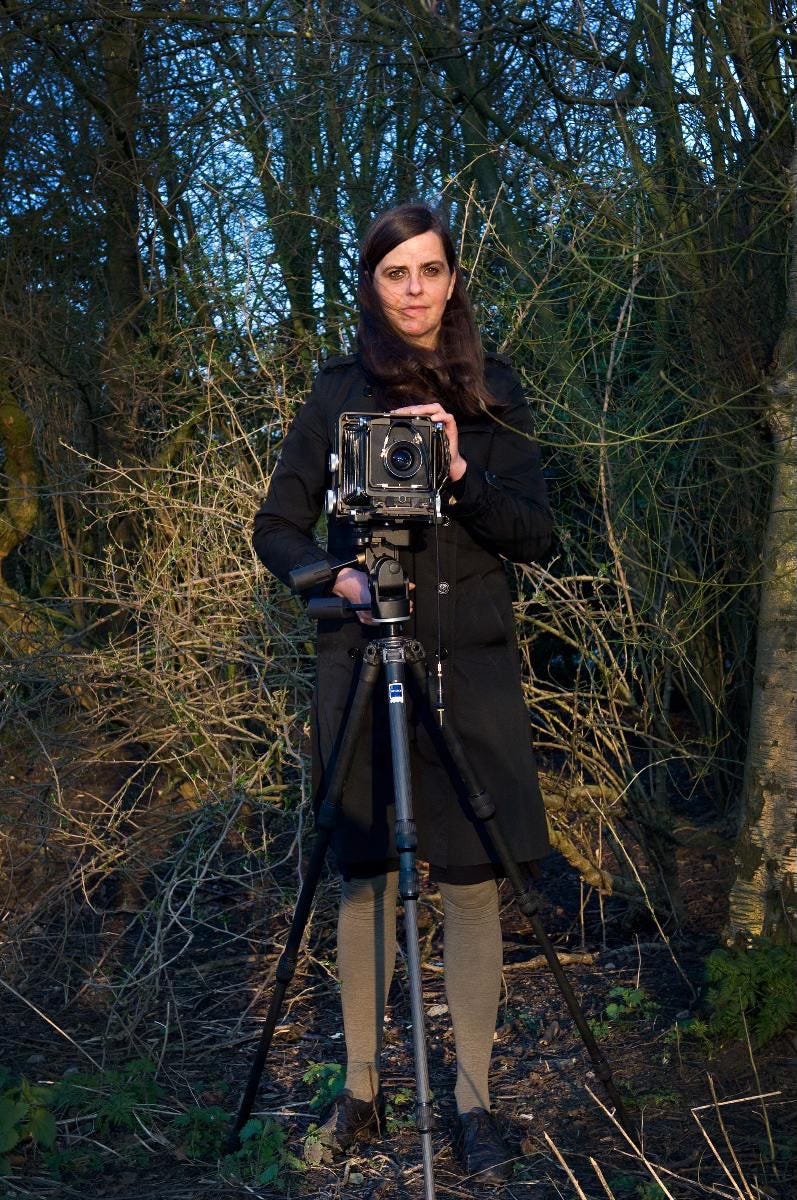
What unites these practices is a shared sense of time and pace. That way of working where looking deepens when the photographer decides to stay with a situation instead of rushing past it. The kind of gaze that shifts toward careful attention and toward what cannot be understood at a glance.
This is something I learned quite literally from our current Het Veenmoeras exhibition. Peatlands grow at a rate of roughly one millimetre per year, making them among the slowest-forming living systems in Europe. What appears inert or uneventful from the surface is, in fact, a dense ecology of accumulation: plant matter, water, carbon, and time layered carefully on top of one another. Peats real value lies in its slowness. And that slowness is also what makes peatlands vulnerable to extraction. Once peat is drained, cut, or commodified (for fuel or agriculture) centuries of stored matter and care are undone in a single season: what took generations to form can be exhausted almost instantly.
Peat teaches us that systems organized around care, duration, and maintenance are often misread as passive or unproductive, and therefore treated as expendable.
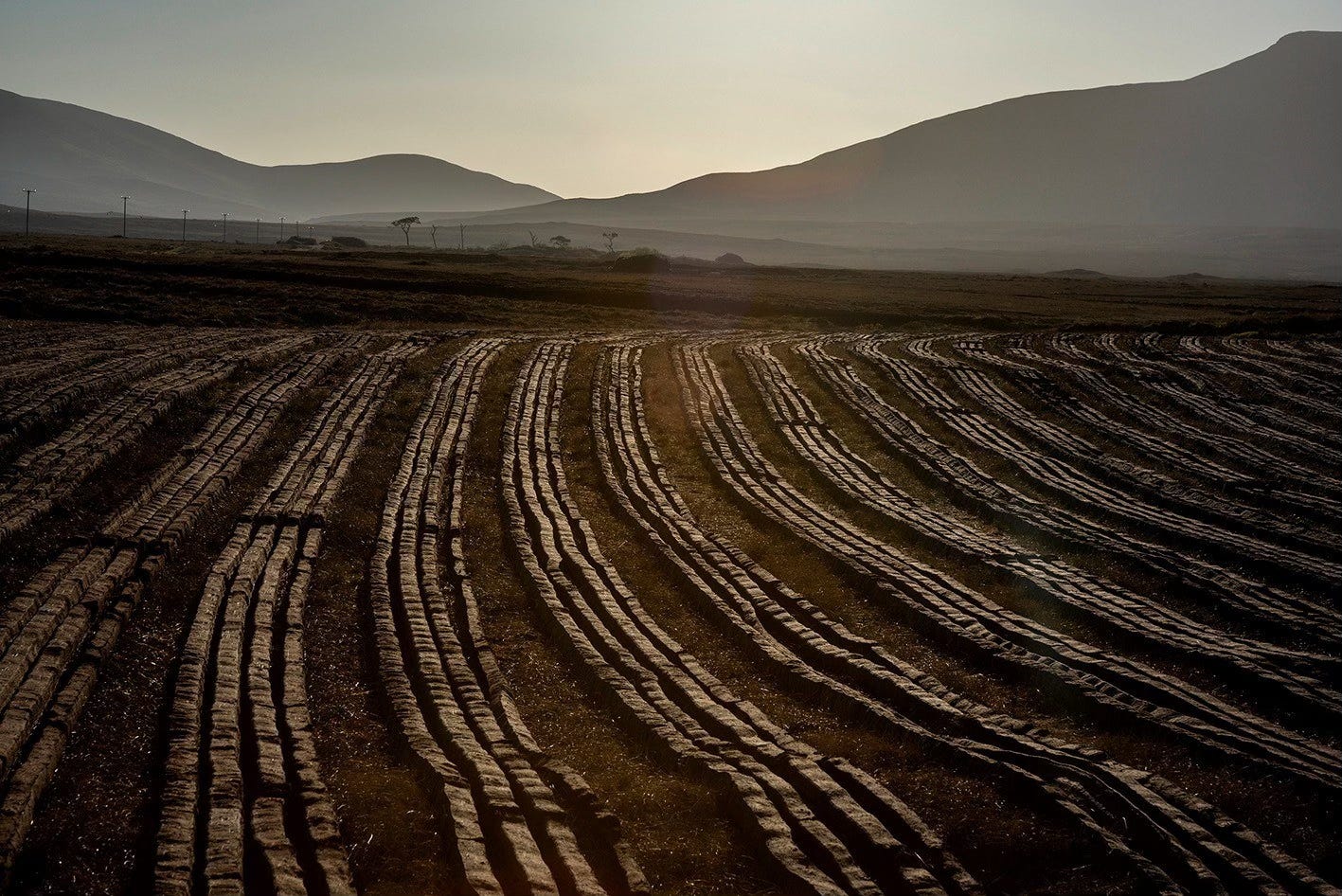
It reads like I am sloppily getting off topic, but this is not a detour. The comparison might be somewhat uncanny, but hear me out: the way peat accumulates slowly through care rather than extraction offers a useful lens for thinking about artistic practices that develop outside dominant timelines of visibility and reward.
Because what I actually want to address is the position of women artists, and especially older women artists, whose practices do not necessarily peak early, nor align with the schedules institutions continue to privilege. Like peat, these practices are often misread as ‘dormant’ or ‘depleted’ at the very moment when they are most layered, most stable, and most capable of holding depth.
Feminist art historian Griselda Pollock has long argued that women’s artistic trajectories are systematically misread because they fail to conform to the heroic model of artistic genius: linear, singular, and uninterrupted. Careers shaped by care, interruption, repetition, and return are too easily framed as inconsistent or fragile, rather than recognised as complex and resilient structures of practice. In Vision and Difference (1988), Pollock demonstrates how art history naturalises a gendered way of seeing and sustains itself by overlooking forms of artistic development that do not announce themselves loudly or early. Her intervention is not simply about adding women back into the canon, but about questioning the temporal, visual, and ideological frameworks through which artistic value has been defined in the first place.2 Pollock critiques the canon by re-evaluating male artists and re-inserting women artists (like Berthe Morisot) into art history, focusing on the ‘male gaze’.
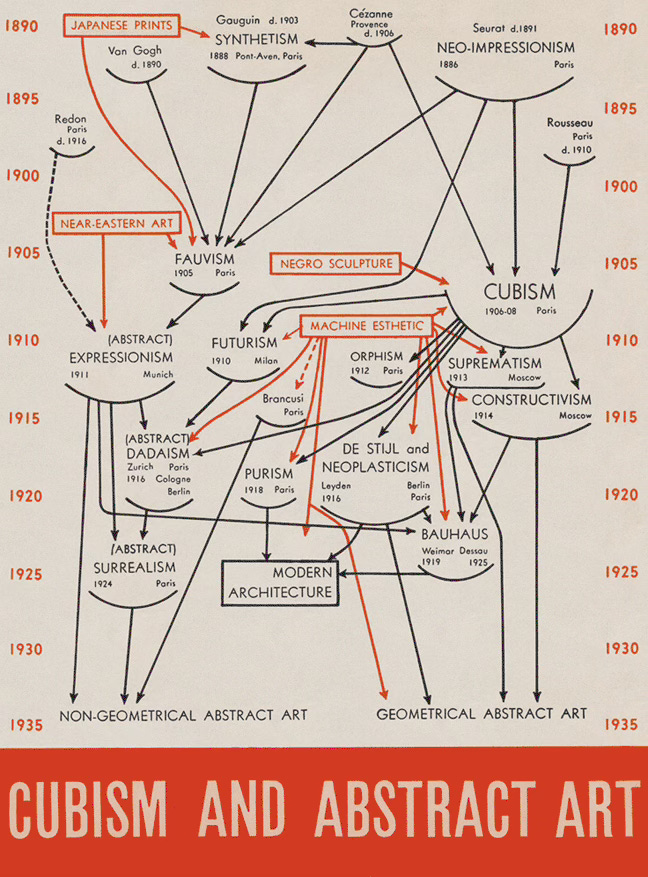
(about the Barr diagram) “Over each movement a named artist presides. All those canonized as the initiators of modern art are men. Is this because there were no women involved in early modern movements? No. Is it because those who were, were without significance in determining the shape and character of modern art? No. Or is it rather because what modernist art history celebrates is a selective tradition which normalizes, as the only modernism, a particular and gendered set of practices? I would argue for this explanation. As a result any attempt to deal with artists in the early history of modernism who are women necessitates a deconstruction of the masculinist myths of modernism.“
— Griselda Pollock, Vision and Difference, p50 (1988)3
This analysis resonates strongly with the work of Silvia Federici, who has shown how labour that sustains life has historically been rendered invisible precisely because it does not align with dominant economic metrics.4 That logic does not end at the threshold of the art world. Care, relational labour and long-term commitment often remain unnamed, and therefore unsupported, even when they are central to the work itself. Ursula K. Le Guin’s Carrier Bag Theory5 proposes an alternative to the heroic, weapon-driven story of progress. Instead of the spear, she gives us the container: the bag that gathers, holds and carries all those long-treasured stories. From this perspective, artistic development is not a race toward visibility, but an infrastructure that is slowly built, maintained and filled over time.
Crucially, support often drops away at the very moment when practices become most layered. Too old for starter grants, too experienced for ‘emerging talent,’ yet still working, still searching, still refining a gaze that has been formed over decades. This is not an unfortunate oversight; it is a structural failure of imagination. We invest generously in beginnings, in promise and potential, but rarely in continuation.
And that structural failure has measurable consequences. Female visual artists earn on average 20% less than their male counterparts (Boekmanstichting, 2024).6 In the broader cultural sector, that gap rises to 33% (Women Inc/ABN AMRO, 2022).7 Concretely: for every €100 a female artist earns per year, her male colleague writes €150. That is a 50% difference, and 81% of Dutch people estimate the gap to be smaller than it actually is. And then there is the matter of representation. Only 13% of the art in the eight largest Dutch museums was made by a woman. 70% of all art exhibitions in the Netherlands contain no work by a woman at all (Boekmanstichting, 2024).
So these are not abstract statistics. They describe the conditions in which women build their practices, and explain why they are disproportionately absent from existing support structures. Targeted programmes can help close these gaps.
It is important to acknowledge that there are meaningful exceptions. In the Dutch context, the Mondriaan Fonds has taken an important step with the Voucher Kunstenaar met Kind. This is a recognition that care responsibilities shape artistic careers, and that residencies, exhibitions, and international work often come with additional, invisible costs. By supporting childcare and related travel or accommodation expenses, the voucher of €2,500 helps. And it matters a great deal. It treats care not as a private issue, but as a structural condition of artistic labour. At the same time, this also reveals what remains missing. It offers temporary, activity-based support, but does not address artistic continuity over time, particularly for artists whose practices unfold across decades, shaped by recurring cycles of care, interruption, and return.
During a dinner before the opening of our exhibition Het Veenmoeras, I asked Bo and Tina what they understood by the ‘female gaze.’ Their answer was disarmingly clear: it is not only about following your heart, they said, but mostly about following your gut. Because the heart can romanticize; but the gut knows. It senses when something is off, when proximity matters more than proof, and when it is better not to take the picture at all. This kind of knowledge cannot be accelerated. The gut-feeling settles into the body over years of looking.
Perhaps what I am really talking about, then, is time as artistic capital.
Talent is not a sprint. It behaves less like a race track and more like a peatland: forming slowly, layer by layer, often unnoticed, yet capable of holding extraordinary depth and memory. You work for twenty years and are suddenly described as an ‘overnight success,’ as if those nights had not stretched on for decades, accumulating experience rather than applause.
Peat, the star in the exhibition Het Veenmoeras, teaches us something quietly radical: what grows slowly often endures the longest. And from that understanding, a concrete intention is taking shape.
During the opening lecture, I made a promise to explore the creation of a working stipend specifically for artists at a later stage in their practice. The intention is to support those who continue to deepen their work and whose gaze teaches us to see with a different sense of tempo, responsibility, and care. It recognizes that certain forms of artistic intelligence only become visible over time.
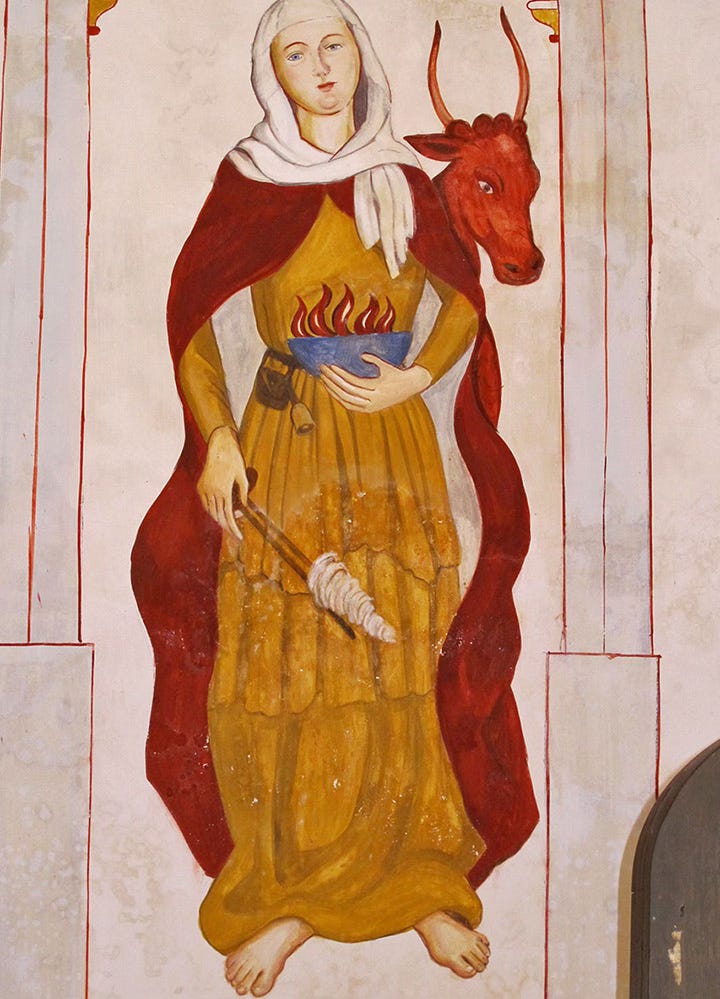
I announced this on the celebration of the Irish St. Brigid’s Day, a yearly celebration on February 1st. Brigid is a liminal figure, associated with fire and water, with craft and healing, with poetry and smithing. She belongs to thresholds rather than straight lines, to cycles rather than progress narratives. In pre-Christian traditions, she marks the turning of winter, the moment when what has been held underground begins to stir. Brigid carries knowledge across generations, binding land, labour, and care into a shared continuity.
Ok, as I said during my lecture, I can be a bit ‘long from stof’ when I am excited about something. But I have one final thought that I think is worth sharing. Looking is not a passive act. I would even argue it is a technology of care, and that looking is not the same as seeing.
Therefore, I would like to challenge you to look at art anew: as a way of attending to the world that shapes what becomes visible, but also to attend to what we choose to protect, what to maintain, and what to pass on. Oh, to really see! Because how we look determines where attention settles, to what is allowed to grow. In that sense, looking is a form of responsibility. What ripens in silence often carries the intelligence we will need for our futures.
You can sign the petition I set up here: LINK
Afterthought: if you want to help campaigning or become an active ambassador with me, slide into my DM!
Aging according to the World Health Organizations explanation: ageism refers to the stereotypes (how we think), prejudice (how we feel) and discrimination (how we act) towards others or oneself based on age. Read more here.
Griselda Pollock, Vision and Difference: Feminism, Femininity and the Histories of Art (London: Routledge, 1988).
Griselda Pollock, Vision and Difference: Feminism, Femininity and the Histories of Art (London: Routledge, 1988).
Silvia Federici, Caliban and the Witch: Women, the Body and Primitive Accumulation (New York: Autonomedia, 2004).
Ursula K. Le Guin, “The Carrier Bag Theory of Fiction,” in Dancing at the Edge of the World: Thoughts on Words, Women, Places (New York: Grove Press, 1989).
Boekmanstichting, Arbeidsmarktmonitor Culturele en Creatieve Sector (2024).
Women Inc / ABN AMRO, Genderkloof in de cultuursector (2022).
Well said! 💜✊🏽❤️👏